Case Study
Portfolio Optimization
Expanding portfolio distribution beyond the core category by targeting strategic neighborhoods

OPPORTUNITIES IDENTIFIED
17x
RETURN ON INVESTMENT (ROI)
STRATEGIC INITIATIVES
3X
AGAINST THE LEADING COMPETITOR
STRENGTHENED PORTFOLIO
2X
CLOSED COMPETITIVE GAPS
Executive Summary
Achieving strategic differentiation in the Non-Alcoholic Ready To Drink (NARTD) category depends on a well-structured portfolio that includes relevant products within each segment. Users leveraged Native to estimate the category's performance in order to identify gaps in the priority portfolio in test markets, then scale up nationally once performance had been optimized.
[01]
Challenge
Within the portfolio, not all SKUs carry equal weight—but in-market, they are often managed as if they do. Priority SKUs lacked consistent visibility, competitive positioning shifts by outlet, and the portfolio’s role at the point of sale was not clearly reinforced.
For this manufacturer, the challenge is persistent. Performance is tracked at a high level, but not with the granularity required to understand how individual SKUs are competing—store by store, segment by segment, against specific competitors. As a result, the business lacked an execution-level, continuous view of which SKUs drive outcomes per sub-market and where intervention may be required.
This shows up directly at the shelf. Strategic SKUs are not consistently coexisting in the same outlets. Visibility is fragmented. In some stores, key products are missing entirely. In others, competitors dominate adjacency and placement, shaping consumer choice before the brand enters the decision set.
The constraint is not portfolio depth. It’s coordination and precision.
Commercial and trade marketing leaders did not have a reliable, ongoing way to align SKU-level performance with execution at the point of sale—linking what is happening competitively to what should happen next in-store. Without that, initiatives to improve coexistence and visibility remained episodic and reactive, rather than embedded in how the business operates.
The result is persistent underperformance at SKU level—where the portfolio fails to show up cohesively, and where opportunities to strengthen visibility, defend position, and expand share were inconsistent.
[02]
Solution
By leveraging Native’s intelligence layer, commercial and GTM leaders maintain continuous visibility into how priority SKUs perform against competitors—at the level of segment, outlet, and point of sale.
Commercial leadership tracks competitive performance in real time—monitoring how priority SKUs stack up within each segment of the category and across NARTD brands, with clear visibility into where the portfolio is losing ground and where it has the right to win.
GTM leadership continuously identifies and acts on segment-level gaps—isolating where competitor dominance is concentrated and directing execution toward those points of sale where presence can be contested and converted.
Sales and category leaders deploy SKU-specific strategies with precision—aligning each product to the outlets and segments where it drives incremental value, activating a sustained opportunity pool of approximately 7.2M across strategic growth axes.
This operates as an ongoing competitive system. Intelligence and execution remain tightly linked—continuously surfacing where to compete, how to win, and where to expand—driving accelerated ROI and sustained portfolio growth across the trade.
[Explore other Case Studies]
01
Snacks
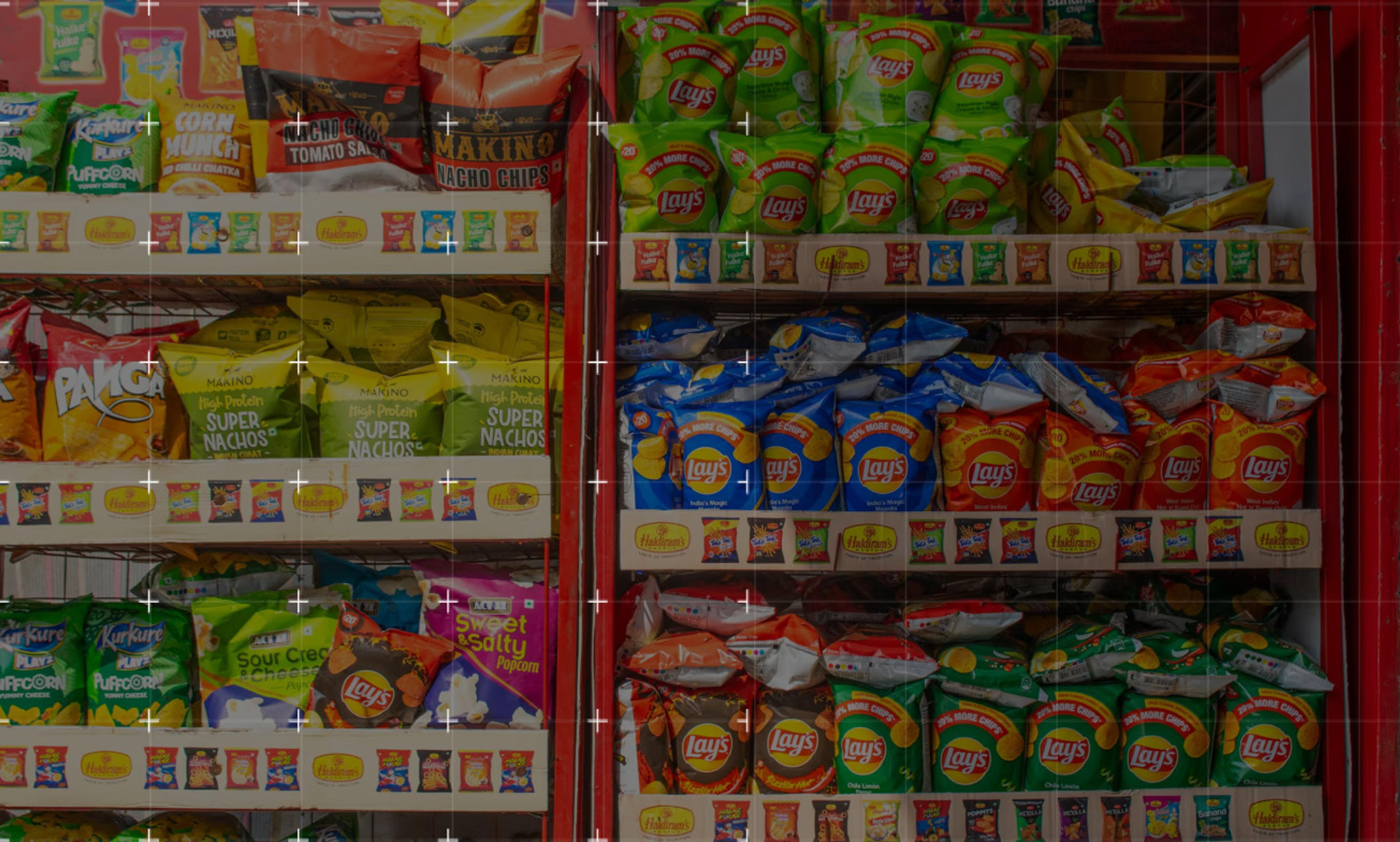
The snack market is highly competitive, so securing space at POS is critical for sustained growth. For a global manufacturer, the key was to expand portfolio distribution beyond the core category by targeting strategic micro-zones.
Find out more
02
Home Care
Accelerating cross-category growth for an HPC manufacturer in Colombia through geographic and distributor prioritization
Find out more
03
Alcoholic Beverages
Achieving a 48% monthly growth rate in a secondary category within the alcoholic beverages sector by capitalising on the brand's core category points of sale.
Find out more